
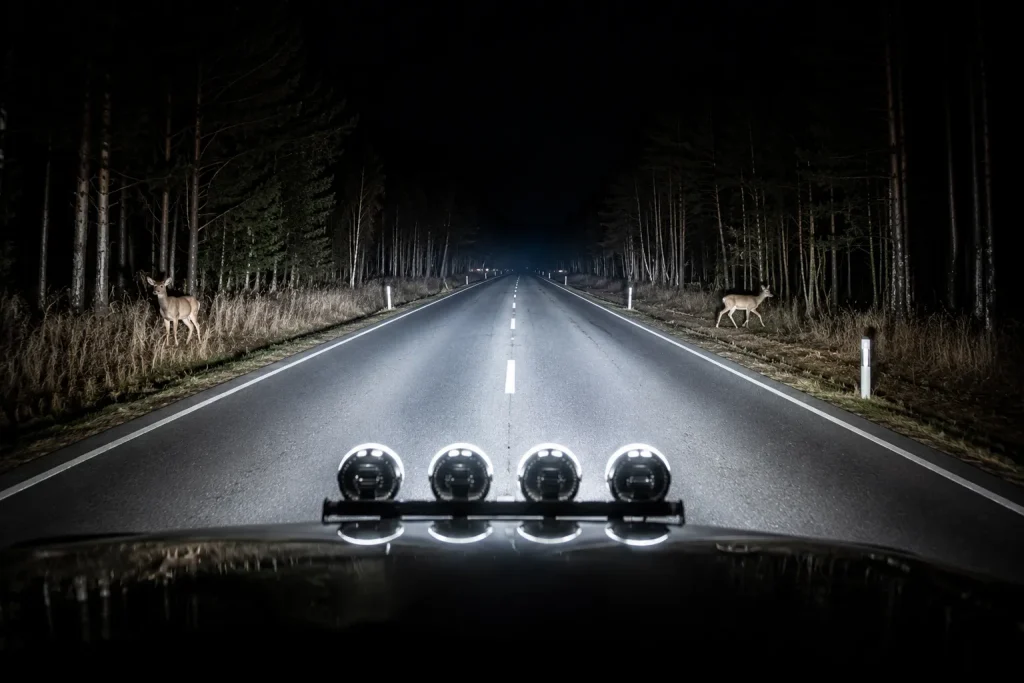
Night driving becomes more challenging when visibility drops. High-Beam Lights help drivers see farther and react faster. According to the National Highway Traffic Safety Administration, nearly 50% of traffic fatalities in the United States occur at night, even though less traffic is on the road. Reduced visibility plays a major role in these crashes.
Additional High-Beam Lights provide stronger illumination than standard factory lighting. They improve the ability to detect animals, road signs, curves, and unexpected hazards. Drivers who regularly travel on rural roads, highways, or poorly lit areas often benefit from extra lighting.
Modern lighting technology has also improved significantly. LED auxiliary lights deliver brighter output while consuming less power. Many systems offer beam distances exceeding 1,300 feet. This added range gives drivers more time to respond to obstacles.
We have tested several lighting setups on long highway journeys and winter roads. Better forward visibility reduced eye strain and increased confidence. Properly installed High-Beam Lights create a safer driving environment without compromising efficiency.
Why Additional High-Beam Lights Improve Night Visibility
Extended Illumination Helps Drivers React Earlier
Additional High-Beam Lights increase the distance a driver can see. Standard low beams typically illuminate about 250 feet. Factory high beams reach around 500 feet. Auxiliary high-beam systems can extend visibility beyond 1,300 feet.
This extra distance provides valuable reaction time. At 65 mph, a vehicle travels nearly 95 feet per second. Extra illumination allows drivers to recognize hazards several seconds earlier. That difference can prevent collisions.
Professional driving instructors often recommend supplemental lighting for people who travel frequently at night. Wildlife crossings, debris, and sharp curves become easier to identify. Visibility also improves during rain and snow.
Key benefits include:
- Increased visibility distance.
- Faster hazard recognition.
- Reduced driver fatigue.
- Better road sign readability.
- Improved safety on rural highways.
Common Visibility Distances
| Lighting Type | Average Distance |
|---|---|
| Low Beam | 250 feet |
| Factory High Beam | 500 feet |
| LED Auxiliary High-Beam Lights | 1,300 feet |
| Premium Driving Light Systems | 1,640 feet |
Choosing the Right High-Beam Lights for Your Vehicle
LED Systems Deliver Superior Performance
Modern LED High-Beam Lights dominate today’s market. They provide excellent brightness while consuming less electricity. Most premium LED driving lights produce between 5,000 and 12,000 lumens.
Color temperature also affects visibility. Experts generally recommend 5,000K to 6,000K lighting. This range creates bright white illumination that closely resembles daylight. Drivers experience less eye strain during extended journeys.
Beam patterns matter as well. Spot beams offer long-distance visibility. Flood beams illuminate wider areas. Combination patterns provide both reach and peripheral coverage. Many off-road and highway drivers prefer hybrid designs.
During our experience with highway travel, combination beams delivered the most balanced performance. They offered excellent forward distance while maintaining side visibility. Proper beam selection improves safety and comfort. Start your journey with our guide to The Importance of Headlight Alignment and How It Affects Your Driving
Factors to Consider Before Buying
Consider these important features:
- Brightness output measured in lumens.
- Beam pattern design.
- Waterproof rating of IP67 or higher.
- Color temperature between 5,000K and 6,000K.
- Vehicle voltage compatibility.
- Mounting options and wiring quality.
Proper Installation and Safe Usage
Correct Alignment Prevents Glare
Proper installation determines how effective High-Beam Lights become. Incorrect positioning can blind other drivers and create dangerous situations. Most experts recommend mounting auxiliary lights level with the vehicle’s headlights.
Aim the lights slightly downward for better road coverage. Wiring should include relays and dedicated fuses. Quality harnesses protect electrical systems from overload. Professional installation ensures compliance with local regulations.
Many states require additional driving lights to operate only with factory high beams. Drivers should check state laws before installation. Responsible use prevents glare and maintains road safety.
Routine maintenance also matters. Dirty lenses reduce light output significantly. Cleaning lights every two weeks preserves maximum brightness. Inspect wiring connections every six months to avoid performance issues.
Maintenance Checklist
| Maintenance Task | Recommended Frequency |
|---|---|
| Lens Cleaning | Every 2 Weeks |
| Wiring Inspection | Every 6 Months |
| Mount Tightening | Every 3 Months |
| Beam Alignment Check | Once Per Year |
| Fuse Inspection | Every 6 Months |
Driving Techniques That Maximize High-Beam Light Effectiveness
Smart Driving Habits Enhance Safety
Even powerful High-Beam Lights work best with proper driving habits. Drivers should reduce speed during fog, heavy rain, and snow. Excessive speed limits reaction time regardless of illumination.
Experts from advanced driving programs recommend scanning farther ahead. Looking 12 to 15 seconds down the road improves awareness. Drivers should also monitor road edges where wildlife often appears.
Turn off high beams when approaching oncoming traffic. Most safety organizations recommend switching to low beams within 500 feet of another vehicle. Courtesy and proper usage protect everyone on the road.
From our experience, combining quality lighting with defensive driving creates the best results. Improved visibility and better awareness work together to reduce stress during long nighttime trips.
Conclusion
Additional High-Beam Lights provide a practical way to improve night driving safety. They extend visibility, increase reaction time, and reduce fatigue during long journeys. Modern LED systems offer impressive brightness while maintaining efficiency. Proper installation and alignment are equally important for safe operation. Drivers who combine quality lighting with responsible driving habits enjoy greater confidence on dark roads. Whether traveling through rural areas or long highways, High-Beam Lights can make nighttime driving safer and more comfortable for everyone.